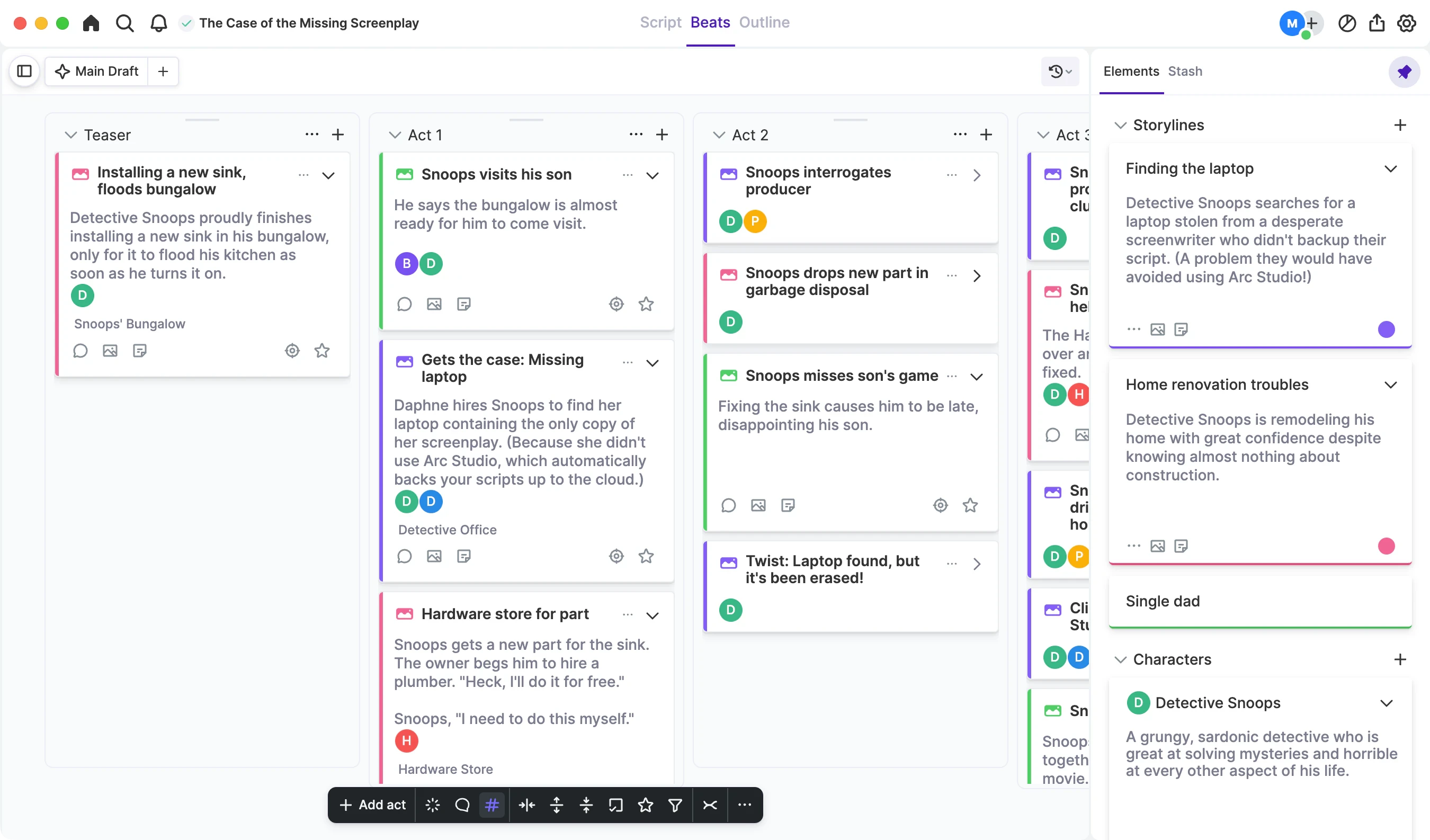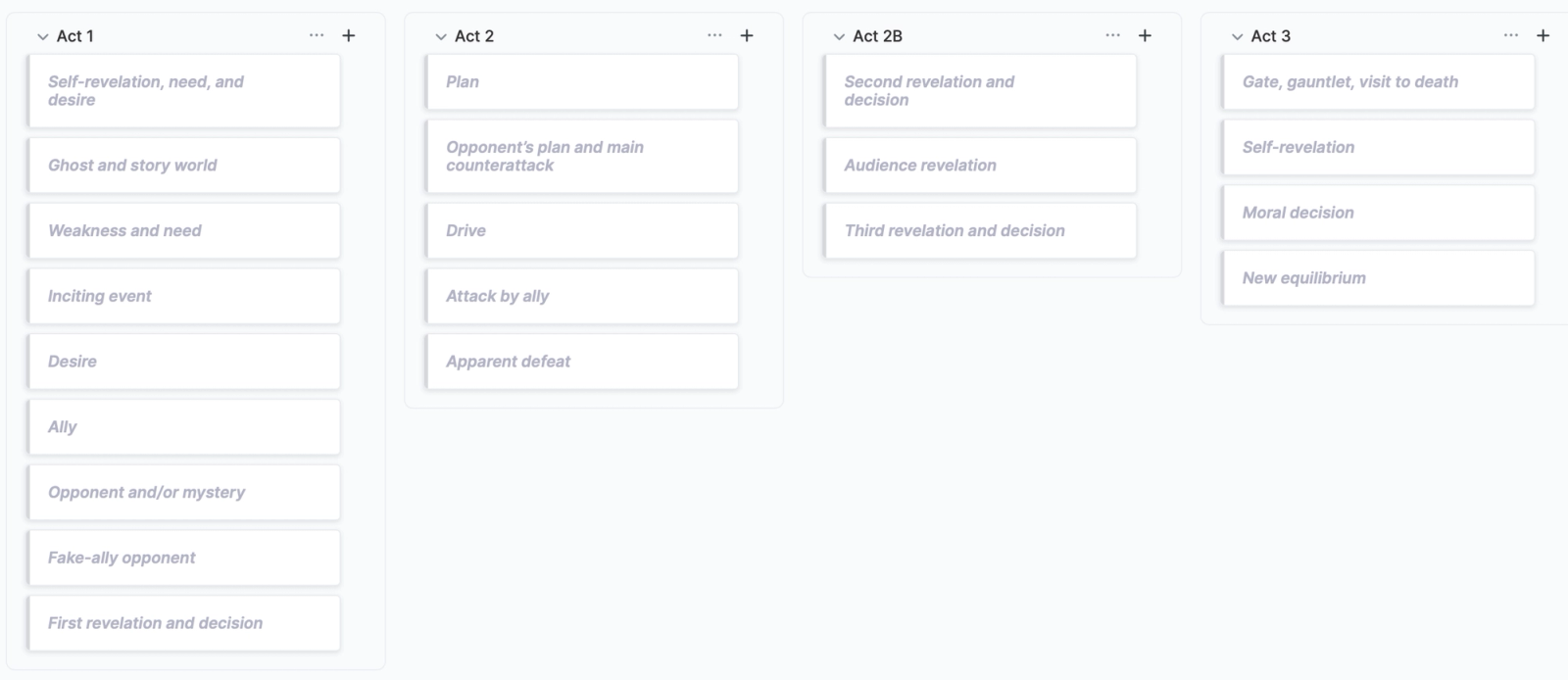
Plot board screenshot of 22 Building Blocks
Unlike the other story structures in this list, John Truby’s 22 building blocks present more like a list of ingredients to make a great recipe rather than a step by step guide. There is some guidance here, but lots of this, especially in the first act, is about getting the fundamental elements down.
Beats
Act 1:
- Self-Revelation, Need, and Desire: In the first act we learn about the protagonist’s inner psychology.
- Ghost and Story World: We also learn about the world and something that haunts the protagonist.
- Weakness and Need: We also learn about the protagonist’s weaknesses and what they need to feel fulfilled.
- Inciting Event: This is the event that sets the story in motion.
- Desire: This provides the opportunity for the protagonist venture forward for their desire.
- Ally: Here they will meet an ally that will be invaluable on the journey.
- Opponent and/or Mystery: But they will also meet antagonistic forces.
- Fake-Ally Opponent: In addition to someone who seems like an ally at first.
- First Revelation and Decision: This leads to the end of Act One where the protagonist makes a choice to venture into the second.
Act 2:
- Plan: The protagonist sets out on a plan to achieve their desires.
- Opponent’s Plan and Main Counterattack: But the antagonists fight back with their own plans.
- Drive: Both the protagonist and antagonist fight each other.
- Attack by Ally: The fake ally betrays the protagonist.
- Apparent Defeat: But the protagonist fails and is apparently defeated.
- Second Revelation and Decision: The hero realizes what they did wrong and is able to enter the third act with a renewed thematic knowledge.
- Audience Revelation: The audience is able to understand how the hero went wrong and their relationship with the hero’s desire changes.
- Third Revelation and Decision: The hero learns all they can and is now able to beat their opponent.
Act 3:
- Gate, Gauntlet, Visit to Death: The hero makes a final sacrifice for their desire, going through the final test.
- Self-Revelation: The hero realizes what they have been doing wrong and what they need to do to set things right.
- Moral Decision: The hero acts on this new knowledge and makes a decision they would not have at the beginning of the story.
- New Equilibrium: Things return to a relative state of normality. The protagonist returns changed.
Pros and Cons
Pros:
- This method acts like a checklist for your story. If you’ve checked off most of the boxes in the first act then you know you have a strong foundation going forward.
- There’s more structure here to work off than some of the other structures mentioned in this list. This list might work well for a writer who likes to plan a lot in advance.
Cons:
- This structure may be too prescriptive for some writers as it does insist on elements that aren’t 100% essential to all stories such as the Fake-Ally opponent.
- Unevenly paced. Though it does represent a lot of the groundwork that needs to be done in Act 1, this structure may not be useful to writers who struggle in the second act.
Difficulty Level: Medium
Use Case: Truby’s method is best paired with another structure, especially for beginners. If you’re more experienced the 22 Steps could prove very useful.
John Truby's book, The Anatomy of Story: 22 Steps to Becoming a Master Storyteller, can be found on Amazon here.