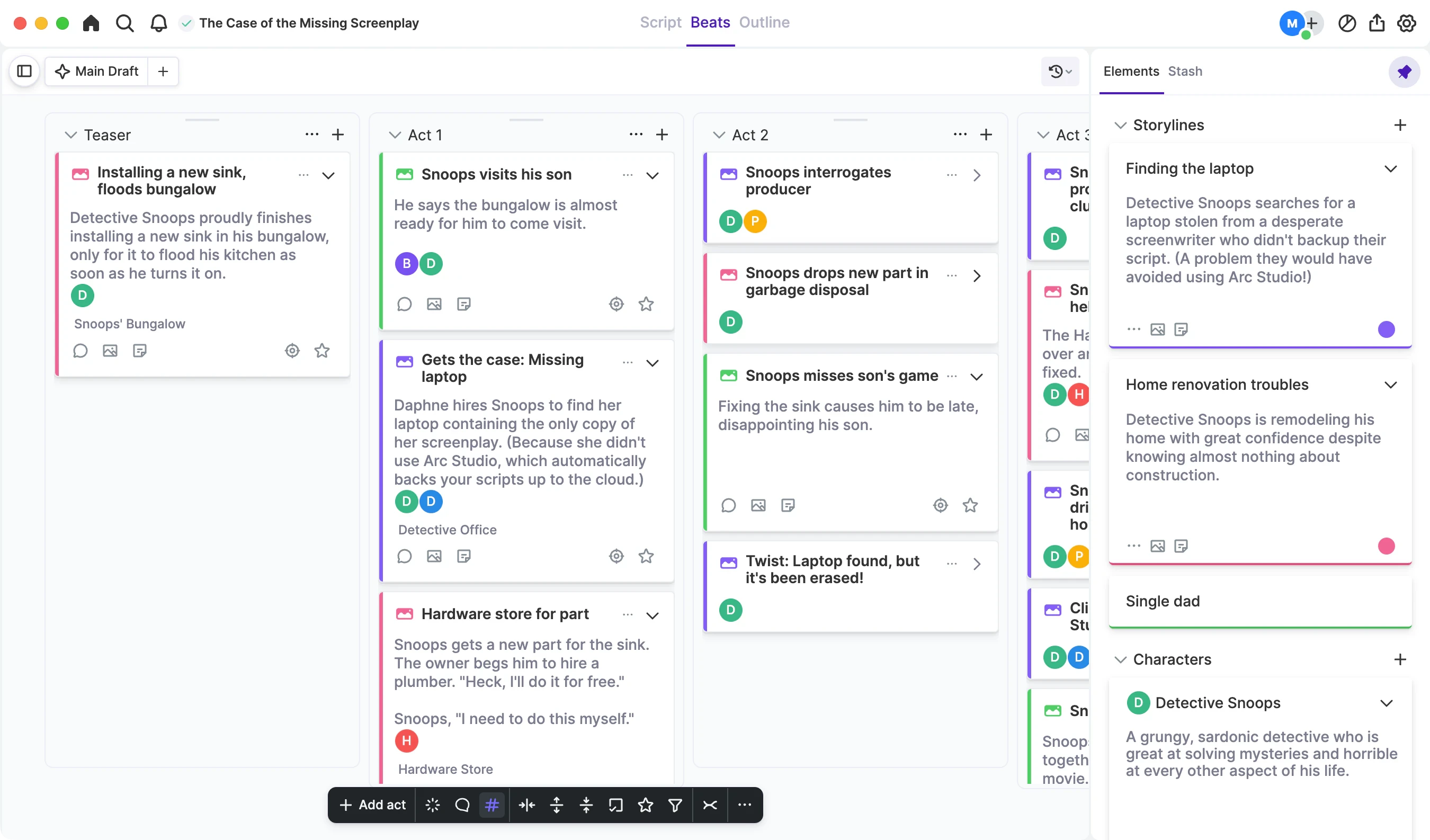
Plotboard of Syd Field's Paradigm
Syd Field is a relatively famous story structure guru that many screenwriters turn to when attempting to get deeper into how a story works. Field takes a more stripped back approach compared to Save the Cat and breaks the story by key plot points and pinches. Inciting an incident sets the story in motion, the pinch focuses the story on the next section, each plot point are significant events that spin the story in a different direction.
Beats
Act 1:
- Opening Scene: An opening that grabs the audience and makes a thematic statement.
- Inciting Incident: The plot point that sets your movie in motion.
- Plot Point 1: A plot point that drives the story into the second act.
Act 2A:
- Pinch 1: The first set of major challenges for the protagonist.
- Midpoint: A plot point that raises the stakes and changes the direction of the story.
Act 2B:
- Pinch 2: The challenges are now more difficult and the protagonist is overwhelmed and defeated.
- Plot Point 2: The protagonist realises their strength and pushes into the third act.
Act 3:
- Climax: The climactic moments of the plot.
- End: A denouement where any plot threads are tied up.
Pros and Cons
Pros
- Easy to remember. There’s no massive checklist of point to memorize here. This won’t take up much mental headspace.
- There’s room to move. Unlike Save the Cat, Syd Field’s ideas allow the writer plenty of free space between these prescribed moments to explore the story in their own unique way.
- Easy to understand. There’s not a lot of in-depth philosophical work here. It only takes a look or two and you understand what he’s trying to do.
Cons
- For some there may be too much room to manoeuvre here.
- The actual meaning for what a plot point and a pinch point are pretty nebulous.
Difficulty Level: Hard
Use Case: If you’re an experienced writer and have a strong grasp of the fundamentals, Field’s Paradigm may suit as a guiding light.
Syd Field's book, Screenplay: The Foundation of Screenwriting, can be found on Amazon here.